




SC to Centre on CJP protest: Can't halt everything, reconsider blanket restrictions on Metro, Railways
Sat 10 Oct 2026, 00:31:44
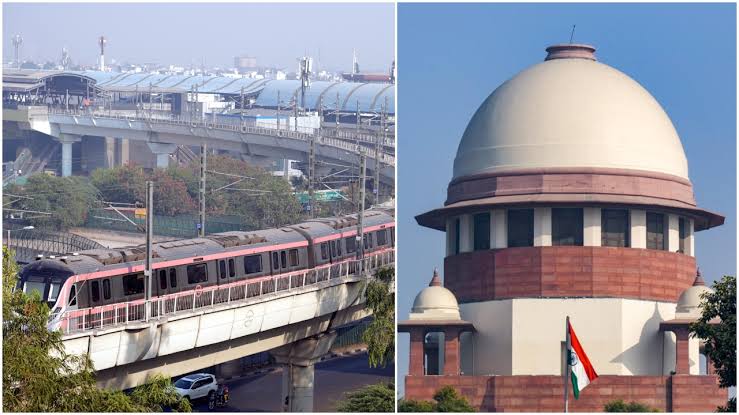
The Supreme Court on Friday asked the Centre to reconsider blanket restrictions on Delhi Metro and railway services ahead of the Cockroach Janata Party's (CJP) October 10 protest, observing that "everything cannot be halted" at the cost of public convenience.
The Cockroach Janta Party (CJP) has announced a protest at Jantar Mantar in Delhi, demanding the resignation of Chief Election Commissioner Gyanesh Kumar for alleged "vote theft.
A bench headed by Chief Justice of India Surya Kant expressed serious concern over the closure of 57 Metro stations and restrictions on train services, saying such measures could cause hardship to millions of commuters travelling from Gurugram, east Delhi, south Delhi and other areas for work.
The court said public transport services should not be shut down entirely and directed the authorities to consider regulated arrangements that would allow services to continue without compromising security.
The Solicitor General assured the bench that he would discuss the matter with the government and concerned authorities to ensure that commuters were not inconvenienced. The court said restrictions should be proportionate to the prevailing situation and that traffic movement must also be ensured.
During the hearing, the court was told that 57 Metro stations had been closed. The bench said it was seriously concerned about the impact on ordinary commuters, noting that while some lawyers might travel in private vehicles, many court staff members relied on the Metro.
"Closing facilities such as Metro stations will cause inconvenience to millions of people. We have to look into this," the court observed.
The CJI said commuters should be informed about the locations of barricades and the alternative routes available to them. The bench stressed that people needed clarity about which transport services would be
operational and when.
operational and when.
Justice Joymalya Bagchi said the court had taken note of the restrictions on Metro and railway services, adding that road transport must also remain available.
"These things cannot be completely shut down," Justice Bagchi observed, while noting that restrictions could be imposed depending on the situation.
Justice Bagchi: We have noted the points regarding the metro and trains. Road transport arrangements must also be in place; these services cannot be completely shut down.
Solicitor: Sometimes, a complete ban is necessary.
Justice Bagchi: Measures should be taken according to the situation, but a total ban would not be appropriate.
Solicitor General Tushar Mehta told the court that permission had been granted for a protest on June 20 for one day, but the demonstrators continued their sit-in for 17 days. He also alleged that protesters had attempted to march towards Parliament.
"I wish to state something with full responsibility. Permission for the protest was granted by the police for June 20th. They obtained permission for one day but continued to sit there for 17 days. An attempt was also made to march towards Parliament," he said.
The Solicitor General said more than 200 police personnel were injured while preventing protesters from entering Parliament.
He further alleged that women police personnel had been molested and maintained that the restrictions were necessary to ensure public safety.
He also disputed the suggestion that the entire national capital had been brought to a standstill, saying internet restrictions were limited to specific areas.
Mehta assured the court that he would take up the concerns over public transport restrictions with the authorities and discuss steps to minimise inconvenience.
No Comments For This Post, Be first to write a Comment.
Most viewed from National

.jpg)
Most viewed from World



Todays Epaper

English Weekly


AIMIM News



Latest Urdu News
Most Viewed
Aug 02, 2026
Should UPI payments remain completely free for all transactions?
Like Us
Home
About Us
Advertise With Us
All Polls
Epaper Archives
Privacy Policy
Contact Us
Download Etemaad App
© 2026 Etemaad Daily News, All Rights Reserved.