



Pakistan sends troops to Saudi Arabia under Mecca pact to defend against Houthis
Sun 29 Nov 2026, 23:04:57
Saudi Arabia's new mutual defence arrangement is beginning to take shape on the ground. Islamabad has announced the deployment of troops to the kingdom as Yemen's Houthi rebels step up attacks on strategic Saudi targets, putting the recently signed Mecca Joint Defence Agreement to an early test, which commits Pakistan, Saudi Arabia and Turkey to treating an armed attack against any one of them as an attack against all.
The deployment comes amid a renewed Houthi offensive against Saudi Arabia, with the rebels stepping up attacks on strategic infrastructure across the kingdom. Between Saturday and Sunday, the Saudi-led coalition reported intercepting multiple incoming missiles, while the Houthis claimed to have carried out five strikes on key Saudi installations, bringing the kingdom's energy, military and transport infrastructure into the crosshairs.
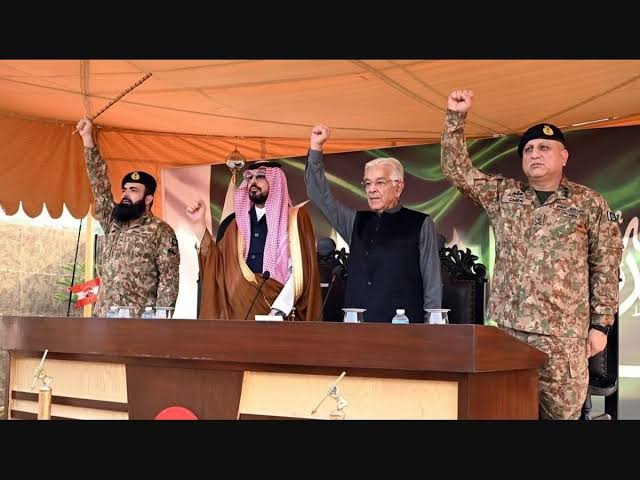
A send-off ceremony was held for Pakistani troops heading to Saudi Arabia, attended by Defence Minister Khawaja Muhammad Asif and Saudi Ambassador to Pakistan Rajeh Tami Albugamy. In its statement, Pakistan's military said the deployment was intended to strengthen
the kingdom's ability to respond to emerging security threats.
"The military deployment reflects Pakistan's unwavering commitment to the security, sovereignty and territorial integrity of the Kingdom of Saudi Arabia," it said. The military also reaffirmed that "Pakistan remains steadfast in its commitment to safeguarding the Kingdom's security and the sanctity of Haramain Sharifain."
Islamabad has not officially disclosed the number of personnel being deployed or how long they will remain in Saudi Arabia. However, Al Jazeera's reported that the contingent comprised around 100 soldiers of various ranks from the Pakistan Army's Lahore Corps. Importantly, Pakistan has maintained that its forces will operate within Saudi territory, indicating that the deployment is focused on protecting the kingdom rather than launching ground operations against the Houthis in Yemen.
The Mecca Joint Defence Agreement, signed on August 7, provides the broader framework for this cooperation. Under the arrangement, an armed attack against one member is considered an attack against all three participating countries.
No Comments For This Post, Be first to write a Comment.
Most viewed from National









Most viewed from World












Todays Epaper

English Weekly

AIMIM News




Latest Urdu News
Most Viewed
Aug 02, 2026
Should the government impose stricter measures to control air pollution in Indian cities?
Like Us
Home
About Us
Advertise With Us
All Polls
Epaper Archives
Privacy Policy
Contact Us
Download Etemaad App
© 2026 Etemaad Daily News, All Rights Reserved.