




IMD confirms El Nino, warns of intensifying conditions through monsoon
Sat 13 Jun 2026, 01:46:56
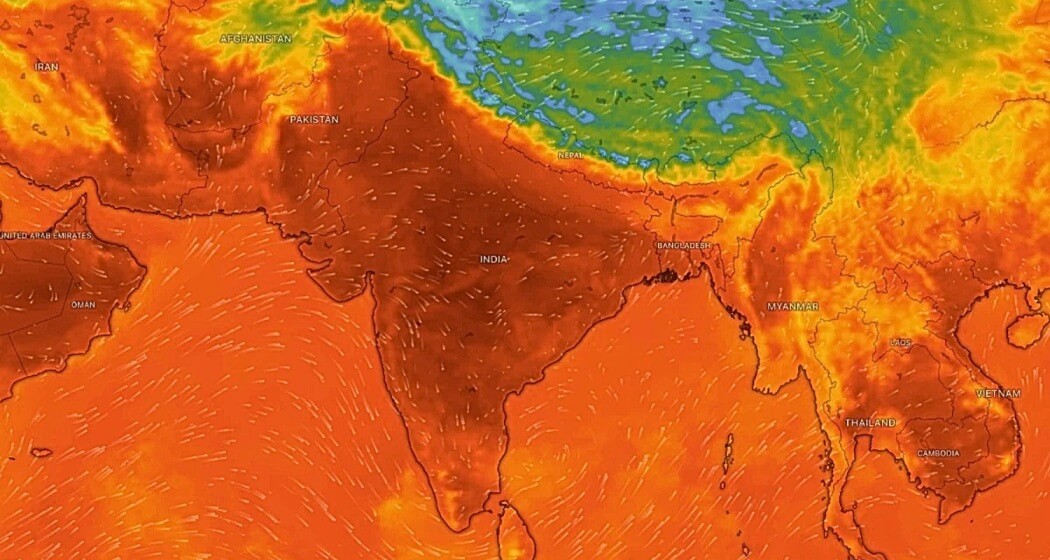
The India Meteorological Department (IMD) has officially confirmed the onset of El Nino conditions over the equatorial Pacific Ocean, warning that the climate phenomenon is likely to strengthen further during the ongoing southwest monsoon season.
In its June 2026 ENSO and Indian Ocean Dipole (IOD) Bulletin, the IMD said that warming sea surface temperatures in the central and eastern Pacific have crossed the threshold required for El Nino conditions.
More importantly, the atmosphere has also responded to the ocean warming, indicating that the coupled ocean-atmosphere system is now firmly in an El Nino state.
"Currently, El Nino conditions are present over the equatorial Pacific Ocean and are expected to strengthen further during the Southwest Monsoon season," the IMD said in its bulletin. Forecasts generated by the Monsoon Mission Coupled Forecast System (MMCFS) suggest that El Nino is likely to intensify as the season progresses.
According to the bulletin, sea surface temperatures in the central tropical Pacific exceeded the El Nino threshold in June 2026.
The latest three-month average Nio 3.4 index, a key indicator used to monitor the phenomenon, has risen above +0.5°C, marking the official onset of El Nino conditions.
The IMD noted that strong positive temperature anomalies are also present beneath the ocean surface across large parts of the equatorial Pacific, a signal that warmer waters are likely to continue surfacing and reinforce the event in the coming
months.
months.
Forecasts indicate that positive sea surface temperature anomalies will persist across the central Pacific during June-August and are expected to expand and strengthen across both the central and eastern Pacific from July onwards. The latest model guidance points to moderate to strong El Nino conditions during much of the southwest monsoon season.
El Nino is a natural climate pattern associated with warmer-than-normal sea surface temperatures in the equatorial Pacific Ocean.
For India, it has historically been linked with weaker monsoon rainfall, higher temperatures, prolonged dry spells and an increased risk of drought in some years.
However, the IMD emphasised that El Nino is not the sole factor influencing India's monsoon. The department noted that neutral Indian Ocean Dipole (IOD) conditions currently prevail over the Indian Ocean and are likely to continue through the monsoon season. A neutral IOD means it is unlikely to significantly amplify or offset El Nino's effects this year.
Meanwhile, Japan's Meteorological Agency (JMA), which officially declared the onset of El Nino on June 11, highlighted a potential silver lining for India, saying a positive Indian Ocean Dipole (IOD) could develop around July and help offset some of the adverse impacts of what could become a super El Nino on the country's monsoon rainfall.
The IMD said it will continue to closely monitor the evolving Pacific Ocean conditions and issue monthly updates as the monsoon season progresses.
No Comments For This Post, Be first to write a Comment.
Most viewed from National











Most viewed from World









Todays Epaper

English Weekly


AIMIM News




Latest Urdu News
Most Viewed
Aug 02, 2026
Should children under 16 be restricted from using social media?
Like Us
Home
About Us
Advertise With Us
All Polls
Epaper Archives
Privacy Policy
Contact Us
Download Etemaad App
© 2026 Etemaad Daily News, All Rights Reserved.