




Amit Shah set a one-year deadline to implement new criminal laws in India
Wed 26 Aug 2026, 02:06:35
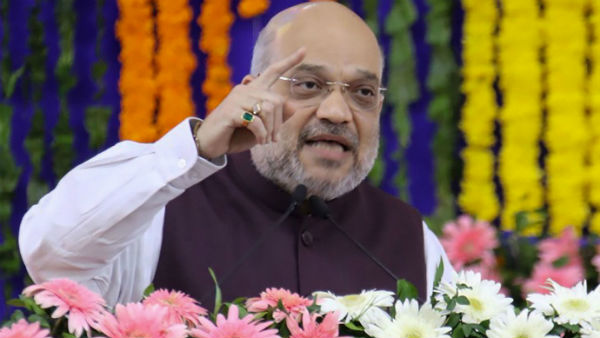
Union Home Minister Amit Shah on Tuesday set a one-year deadline for 100 per cent implementation of the three new criminal laws, saying the move will enable disposal of criminal cases up to the Supreme Court within three years and raise the conviction rate by 25 per cent.
Addressing the valedictory session of the Intelligence Bureau’s two-day ninth National Security Strategies (NSS) Conference-2026 that concluded on Tuesday, Shah said the forum of NSS needs to anticipate security challenges 15-20 years ahead and devise strategies to prevent them from becoming major threats.
The Bharatiya Nyaya Sanhita (BNS), Bharatiya Nagarik Suraksha Sanhita (BNSS) and the Bharatiya Sakshya Adhiniyam (BSA) came into effect on July 1, 2024. The new laws replaced the British-era Indian Penal Code, Code of Criminal Procedure and the Indian Evidence Act respectively.
“There will be 100 per cent implementation of three new laws in the next one year, so that criminal cases can be disposed of up to the Supreme Court within three years and the conviction rate will increase by 25 per cent,” the home minister said.
He said integrated data bank of Crime and Criminal Tracking Network and Systems (CCTNS), Inter-Operable Criminal Justice System (ICJS), NatGrid and National Automated Fingerprint Identification System (NAFIS) has been created.
Shah said all young officers should develop actionable intelligence through data
integration, analysis and identification of modus operandi through AI, so that future challenges can be prevented.
integration, analysis and identification of modus operandi through AI, so that future challenges can be prevented.
He said the government has “ended” the challenges posed by three major internal-security hotspots– Naxals, Jammu and Kashmir terror and Northeast insurgency– and credited the police forces of all states, central agencies and Central Armed Police Forces for the achievement.
He said that had earlier governments visualised the problems of narcotics, Naxalism and the Northeast before they became acute, the country would not have had to bear the brunt of them for decades..
Shah said the destruction of the entire cadre and banning of the Popular Front of India (PFI) in one night was an “excellent example” of Centre-state coordination.
The home minister said he had visited all land-border states over the past eight months and shared with them a document outlining a quadrangular approach to border security.
“Our aim is to make the country free of infiltrators in a very short time,” he said. Calling infiltrators a threat to national security, the economy and demographic change, Shah said only citizens of the country have the right to live in India.
“This country is not a dharamshala and only the citizens of the country have the right to live in this country, infiltrators are a threat to the country’s security, economy and demographic change,” he said.
No Comments For This Post, Be first to write a Comment.
Most viewed from National







Most viewed from World









Todays Epaper

English Weekly


AIMIM News


Latest Urdu News
Most Viewed
Aug 02, 2026
Do you think Artificial Intelligence will create more jobs than it replaces?
Like Us
Home
About Us
Advertise With Us
All Polls
Epaper Archives
Privacy Policy
Contact Us
Download Etemaad App
© 2026 Etemaad Daily News, All Rights Reserved.