




Agreement with Oman on Hormuz shipping route reached, warns of US actions: Iran
Thu 06 Aug 2026, 02:13:25
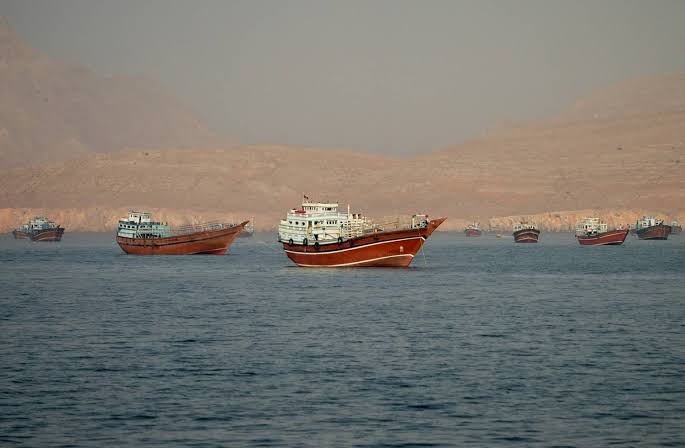
A big breakthrough appears to be taking shape in negotiations over the Strait of Hormuz, with Iran announcing on Wednesday that it had agreed with Oman on the geographic coordinates of a proposed shipping route. Tehran, however, said the agreement would not guarantee security unless regional tensions, particularly involving the United States, were addressed.
Iranian Foreign Ministry spokesperson Esmaeil Baghaei said both sides were in the final stages of preparing a joint announcement, provided "certain third parties" did not interfere in the process. Negotiations over the Strait of Hormuz have gathered pace after months of conflict and disruptions to commercial shipping triggered by the US-Iran war. The waterway carries nearly one-fifth of the world's oil and gas supplies, making any agreement on vessel movement critical for global energy markets and international trade.
Speaking at a media briefing, Baghaei said the talks between Tehran and Muscat were "professional" and "moving forward". He said Iran and Oman had reached a "mutual understanding on the geographical parameters of the route under discussion".
According to Baghaei, the two countries are now finalising a joint statement outlining the major principles of the agreement.
"If some third parties do not obstruct the process," he said, the announcement could be issued once the final review is completed.
Despite describing the talks as constructive, Iran stressed that the proposed arrangement would not automatically ensure the security of commercial shipping in the strategic waterway.
Baghaei said several factors contributing to instability in the Strait of
Hormuz are still unresolved. He specifically pointed to the US naval blockade and other "aggressive and threatening actions against Iran and its interests", arguing that such measures could still jeopardise maritime security.
Hormuz are still unresolved. He specifically pointed to the US naval blockade and other "aggressive and threatening actions against Iran and its interests", arguing that such measures could still jeopardise maritime security.
If implemented, the arrangement would hand Iran an unprecedented role in regulating commercial vessels entering the Gulf through the Strait of Hormuz, a strategic concession that shows Tehran's growing leverage in negotiations over one of the world's most critical energy corridors. Even so, senior Iranian and regional officials told Reuters that many issues are unresolved, tempering expectations after US President Donald Trump said a deal to reopen the waterway was imminent.
Baghaei also said Iran remained engaged with regional partners as negotiations continued. He confirmed that Iranian officials were continuing to exchange views with counterparts in Pakistan and Qatar. At the same time, he clarified that neither Foreign Minister Abbas Araghchi nor Parliament Speaker Mohammad Bagher Ghalibaf currently had plans to visit either country.
Meanwhile, US President Donald Trump also had projected optimism over the negotiations, saying "a lot of progress" had been made and claiming Iranian officials had reached out seeking talks. "We'll know in 48 hours, I would say," Trump told reporters before departing Los Angeles for Las Vegas.
He said Tehran would be "very smart" to reach an agreement. A day earlier, Trump had said the Strait of Hormuz would reopen "very soon" under a deal involving Iran and Oman, while warning Iran would be "hit very hard" if negotiations failed. He also reiterated that Tehran would never be allowed to acquire a nuclear weapon.
No Comments For This Post, Be first to write a Comment.
Most viewed from International



Most viewed from World










Todays Epaper

English Weekly


AIMIM News



Latest Urdu News
Most Viewed
Aug 02, 2026
Should UPI payments remain completely free for all transactions?
Like Us
Home
About Us
Advertise With Us
All Polls
Epaper Archives
Privacy Policy
Contact Us
Download Etemaad App
© 2026 Etemaad Daily News, All Rights Reserved.