




6.0-magnitude earthquake hits Japan's Noda region
Thu 01 Jan 2026, 01:42:15
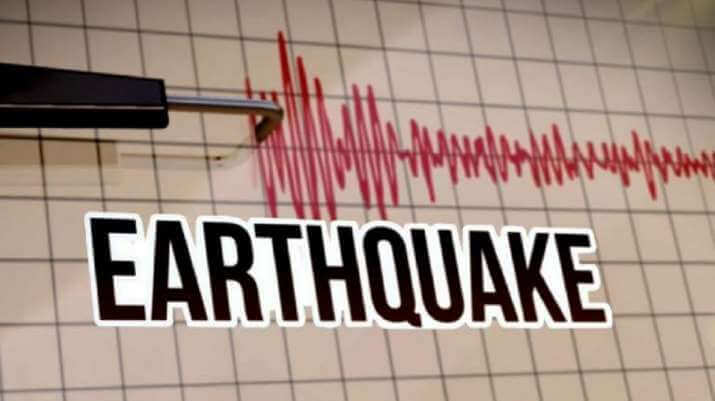
A 6.0-magnitude earthquake struck off the coast near Japan’s Noda region on Wednesday, according to the United States Geological Survey (USGS). The quake occurred offshore at a depth of 19.3 kilometres, reducing its impact on land.
There were no immediate reports of loss of life or property damage, officials said. Japanese authorities are monitoring the situation closely to assess any possible after-effects. As of now, no tsunami warning has been issued, and normal conditions continue in coastal areas.
The latest tremor comes just weeks after a powerful 7.5-magnitude earthquake hit offshore on December 8, injuring at least 30 people and forcing nearly 90,000 residents to evacuate. Following that quake, the Japan Meteorological Agency (JMA) issued
tsunami warnings for parts of the northeastern coast, including Hokkaido, Aomori, and Iwate. Tsunami waves measuring 20 to 70 centimetres were recorded at several ports.
tsunami warnings for parts of the northeastern coast, including Hokkaido, Aomori, and Iwate. Tsunami waves measuring 20 to 70 centimetres were recorded at several ports.
Japan is one of the most earthquake-prone countries in the world, experiencing tremors frequently due to its location on the Pacific “Ring of Fire.” Nearly 20 per cent of all earthquakes worldwide measuring 6.0 or higher occur in or around Japan.
The country’s northeastern region has seen some of the deadliest earthquakes in history. On March 11, 2011, a massive 9.0-magnitude earthquake struck off the coast near Sendai, triggering devastating tsunamis. The disaster claimed nearly 20,000 lives and caused widespread destruction, making it the strongest earthquake ever recorded in Japan.
No Comments For This Post, Be first to write a Comment.
Most viewed from International
.jpg)







Most viewed from World











Todays Epaper

English Weekly


AIMIM News








Latest Urdu News
Most Viewed
May 26, 2020
Which cricket teams will reach the IPL 2026 finals?
Latest Videos View All
.jpg)
.jpg)
.jpg)


Like Us
Home
About Us
Advertise With Us
All Polls
Epaper Archives
Privacy Policy
Contact Us
Download Etemaad App
© 2026 Etemaad Daily News, All Rights Reserved.