




SC gives FSSAI final two weeks on HFSS food warning labels
Sun 16 Aug 2026, 16:37:44
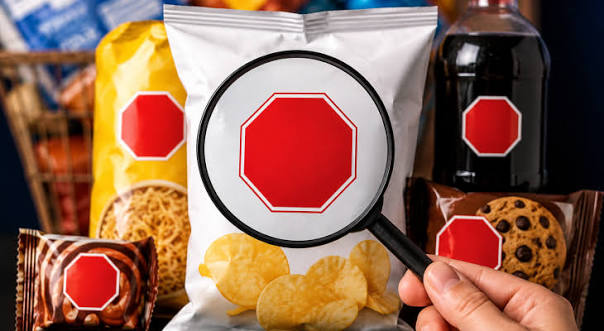
Will India finally get warning labels on packaged foods high in sugar, salt and saturated fat (HFSS)? The answer could come before the end of this month, with the Supreme Court giving the Food Safety and Standards Authority of India (FSSAI) a final two-week window to reconsider its position on front-of-pack warning labels.
The issue has been stuck in a regulatory loop for years. But the SC's increasingly firm intervention has brought it to a point where the government may have to make a clear choice: put a simple warning on the front of a packet, or retain a nutrition-information format that leaves consumers to interpret the numbers themselves.
“We do not suggest, we direct," the bench led by Justice J.B. Pardiwala told the FSSAI on August 13, making it clear that its earlier order was not a suggestion but a binding direction.
The Court questioned the government counsel: "Do you not want people to be healthy?" and rejected FSSAI's argument that warning labels would unfairly target traditional Indian foods like namkeen and eggs.
The bench asked: "Should Indians always remain underdeveloped?" – making it clear that India must match and lead global standards on public health.
The proceedings arise from the Court's earlier order in February this year, when the Court had expressed dissatisfaction with FSSAI's progress and observed that the exercise undertaken so far had not yielded any "positive or good result."
The Court had directed FSSAI to consider warning-based front-of-package labelling, illustrating the proposed approach through warnings such as "High Sodium Level," "High Sugar Level," and "High Saturated Fat Level."
The case began after FSSAI proposed a star-rating system for packaged foods in September 2022. Public health experts criticised the model because a product high in sugar, salt or fat could still score well if it performed favourably on other parameters.
A star rating, they argued, could therefore create a "health halo" rather than warn consumers about specific nutrients of concern.
Kerala-based non-profit 3S and Our Health Society challenged the approach in the Supreme Court, invoking the right to health under Article 21 of the Constitution.
In February this year, the court, led by Justice J B Pardiwala, stepped up its intervention. In its February 10 order, it illustrated the kind of warning it wanted FSSAI to consider: clear declarations such as "High in Sugar", "High in Salt" and "High in Saturated Fat". The court observed that the approaches tried so far had not produced a "positive or good result".
But instead of moving towards such warnings, FSSAI's latest proposal has gone in another direction.
In its August 3 compliance affidavit, FSSAI proposed displaying daily recommended limits for added sugar, saturated fat and salt alongside nutritional information. The figures are 25 grams of sugar, 10 grams of saturated fat and 5 grams of salt.
There would be no prominent warning symbol telling a consumer that a product is high in any of these nutrients, the regulator informed the court. For practical purposes, it means the consumer would have to read the table, locate the nutrient values, compare them with recommended limits and make the assessment.
That distinction is at the heart of the ongoing case.
The petitioners have argued that numerical disclosure cannot substitute an interpretive warning. They have also pointed to Indian evidence suggesting that warning labels are more effective.
A six-state randomised field experiment cited before the court found that 60.8%
of participants correctly identified products as "high in" a nutrient when shown a warning label, compared with 55% using a numerical table and 45% using a star-rating system.
of participants correctly identified products as "high in" a nutrient when shown a warning label, compared with 55% using a numerical table and 45% using a star-rating system.
The petitioners have also highlighted FSSAI's own past deliberations. Minutes of a June 2021 stakeholders' meeting, they say, show that the regulator had earlier rejected several positions that now resemble its latest proposal.
These included the use of serving size as the basis for comparison and a GDA-style monochrome format. The 2021 minutes recorded that FSSAI preferred 100 grams/ml as a reference because it enabled "a rational comparison among products."
They also recorded concerns around using added sugar, with the scientific members favouring total sugars, and noted that there was insufficient evidence to support the effectiveness of a monochrome GDA (guidelines daily amount) format.
The petitioners have described FSSAI's current position as a "U-turn" from these earlier deliberations and questioned why the regulator did not disclose the 2021 minutes in its compliance affidavit.
The SC’s August 13 hearing has now raised another fundamental question: how much weight should industry opinion carry when public-health regulations are being framed?
For public-health advocates, the message was significant.
"The Court has put public health above profits. The Court has made it clear: warning labels are not optional but a constitutional right to health," said Dr Arun Gupta, convenor of Nutrition Advocacy in Public Interest (NAPi).
Dr Gupta added that the court's refusal to hear industry counsel sent "a powerful message" and argued that industry should not be involved in framing public-health regulations, though it could be consulted on implementation.
The debate may appear to be about the design of a food packet. It is actually about who bears the burden of making sense of nutrition information.
A warning label communicates risk almost instantly. A table requires literacy, numeracy and time. That distinction matters in a country where health literacy varies widely and where food packaging increasingly competes for consumer attention through claims such as "healthy", "natural" or "fortified".
It also matters because the burden of diet-related disease in India is enormous. The Indian Council of Medical Research – National Institute of Nutrition (ICMR-NIN) – a nutrition research body-has estimated that 57% of India's total disease burden is attributable to unhealthy diets.
The growing consumption of foods high in fat, sugar and salt, alongside ultra-processed foods, which also have additives typically used in industrially proposed food has increasingly become part of the public-health conversation around obesity, diabetes and cardiovascular disease.
The stakes are particularly high for children, for whom food preferences and habits are shaped early.
India has also spent years debating FOPL. The regulator began examining the issue as early as 2014, considered proposals in subsequent years and eventually moved to its star-rating proposal in 2022.
That proposal itself was later withdrawn after the regulator told the Court that there was no consensus.
Now, after another round of consultations in March and an industry backlash against warning labels, the Court has effectively brought the debate back to the central question: should the consumer be warned, or merely given numbers? As the court has given FSSAI just days to reconsider its position, there is hope that this time, the decision could come before August ends.
No Comments For This Post, Be first to write a Comment.
Most viewed from Health









Todays Epaper

English Weekly


AIMIM News




Latest Urdu News
Most Viewed
Aug 02, 2026
Should UPI payments remain completely free for all transactions?
Like Us
Home
About Us
Advertise With Us
All Polls
Epaper Archives
Privacy Policy
Contact Us
Download Etemaad App
© 2026 Etemaad Daily News, All Rights Reserved.