




SC asks 19 states, UTs to consider declaring cancer a notifiable disease
Sat 15 Aug 2026, 01:19:56
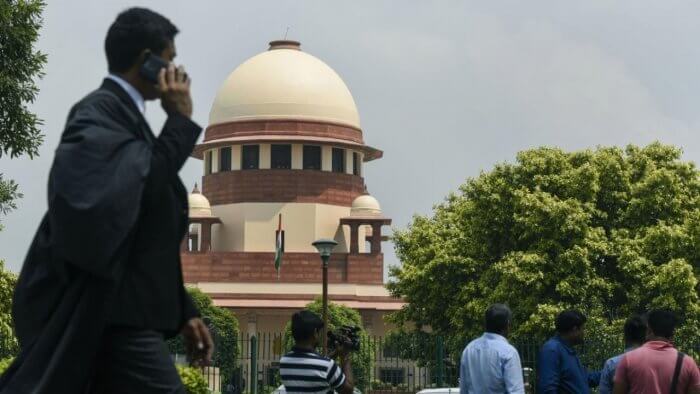
The Supreme Court on Tuesday directed States and Union Territories (UTs) that have not yet notified cancer as a notifiable disease to consider doing so, stressing the need for a uniform policy on the mandatory reporting of cancer cases across the country.
A Bench comprising Chief Justice of India Surya Kant, Justice Joymalya Bagchi and Justice V Mohana was hearing a Public Interest Litigation (PIL) seeking directions for cancer to be declared a notifiable disease across India.
During the hearing, the Court questioned the Centre on why mandatory guidelines could not be issued for all States and UTs to ensure uniform reporting of cancer cases.
Appearing for the Centre, the Additional Solicitor General submitted that health is a State subject.
The Court was informed that 17 States and UTs have already notified cancer as a “notified disease”, following recommendations made by a Parliamentary Standing Committee.
Taking note of the submission, the Court directed the remaining States and UTs to consider the recommendations and take an appropriate decision. The States and UTs have also been directed to file compliance affidavits before the Court.
Among its key prayers, the petition seeks the notification of cancer as a notifiable disease at the national level to ensure uniform and mandatory
reporting.
reporting.
It also calls for the creation of a centralised, real-time digital cancer registry, along the lines of the CoWIN portal, integrated with existing cancer registries, Ayushman Bharat-PMJAY, State health insurance schemes, mortality records and hospital information systems.
The petition further seeks nationwide cancer-screening programmes at Primary Health Centres (PHCs) and Community Health Centres (CHCs), targeting high-risk and age-based groups.
It also calls for a policy to address unverified religious and alternative cancer therapies, including remedies such as Gomutra, along with measures to regulate misinformation surrounding cancer treatment.
The PIL seeks the availability of affordable, evidence-based cancer treatment, including modern medicine and evidence-based AYUSH therapies, at tertiary-care and district-level hospitals.
It also proposes the creation of a dedicated National Cancer Care Fund to support treatment costs, anti-cancer drugs, diagnostic equipment and palliative care for poor and vulnerable patients.
Additionally, the petition calls for strengthening death certification and institutionalising death audits for cancer patients. It also seeks a time-bound roadmap for expanding Population-Based Cancer Registries (PBCRs) to ensure adequate representation of all States and rural areas.
No Comments For This Post, Be first to write a Comment.
Most viewed from Health












Todays Epaper

English Weekly


AIMIM News



Latest Urdu News
Most Viewed
Aug 02, 2026
Should UPI payments remain completely free for all transactions?
Like Us
Home
About Us
Advertise With Us
All Polls
Epaper Archives
Privacy Policy
Contact Us
Download Etemaad App
© 2026 Etemaad Daily News, All Rights Reserved.