




New Ebola vaccine in the works: Soumya Swaminathan says India should be alert
Thu 04 Jun 2026, 00:57:52
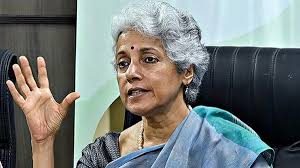
As a deadly Ebola outbreak spreads across parts of Central Africa, scientists around the world are racing to develop vaccines against a rare strain of the virus that currently has no approved vaccine or treatment.
According to the World Health Organisation (WHO), the ongoing outbreak has led to 321 confirmed cases, 116 suspected cases and 48 deaths, primarily in the Democratic Republic of Congo (DRC) and Uganda.
The outbreak is being driven by the Bundibugyo strain of the Ebola virus, a species that differs significantly from the Zaire strain responsible for several previous Ebola epidemics.
While the risk of widespread global transmission remains low, the outbreak poses a serious threat to affected communities and requires urgent international support.
NEW VACCINES IN THE MAKING
Former WHO chief scientist Dr. Soumya Swaminathan said the Bundibugyo strain presents a unique challenge because existing Ebola vaccines and treatments do not work against it.
"The Bundibugyo strain is quite different antigenically from the Zaire strain, for which vaccines and monoclonal antibody treatments were developed. In this case, there has not been any research and development for diagnostics, vaccines or treatments," she said.
Three vaccine candidates are now being developed using different technology platforms.
One candidate is an mRNA vaccine being developed by Moderna. Another uses the recombinant VSV platform developed by the International AIDS Vaccine Initiative (IAVI). A third vaccine is based on the Oxford University's ChAdOx platform, the same technology that was used to develop Covishield during the Covid-19 pandemic.
Swaminathan noted that the partnership between Oxford University and the Serum Institute of India could help speed up vaccine manufacturing if clinical testing proves successful.
"The Serum Institute has the capacity to manufacture a new vaccine very quickly under GMP conditions. But it will still need to undergo safety and efficacy testing before it can be rolled out," she said.
She estimated that even with accelerated development, a vaccine would likely take at least six to nine months before regulatory approvals allow wider use.
IS THE OUTBREAK WORRYING?
The outbreak is unfolding in a region already struggling with conflict, displacement and weak healthcare infrastructure.
Swaminathan, who visited eastern Congo during a previous Ebola outbreak in 2018, said the current situation is particularly concerning because many affected communities are constantly on the move.
"This outbreak is occurring in a border region with high conflict, migration and displacement. In such an environment, it becomes very difficult to mount the kind of public health response needed for Ebola," she explained.
Without vaccines or specific treatments, health authorities are relying heavily on identifying cases, tracing contacts, testing exposed individuals and isolating infections to stop the virus from spreading.
"Right now, what is needed is very good contact tracing and testing. For every infected person, health workers have to track all their contacts, test them and quarantine those who may have been exposed," she said.
The good news, according to Swaminathan, is that the Bundibugyo strain appears to have a lower fatality rate than the more notorious Zaire Ebola strain.
"People can recover if they receive early and adequate supportive care, including fluids, oxygen
and other medical support," she added.
and other medical support," she added.
FUNDING CUTS COMPLICATE THE SITUATION
The outbreak response is also being complicated by reduced public health funding in the DRC.
Swaminathan pointed out that the closure of USAID programmes has weakened disease preparedness efforts in the country.
"Nearly 70% of the DRC's public health financing came from USAID. Since that funding was withdrawn, the preparedness of public health facilities has become worse than it could have been," she said.
However, she noted that international efforts are intensifying. WHO Director-General Tedros Adhanom Ghebreyesus recently visited the affected areas, and African health agencies are leading response efforts on the ground.
Despite financial challenges, around $500 million has reportedly been mobilised globally to support Ebola response activities.
Swaminathan stressed that long-term investments in public health systems remain essential.
"What countries like the DRC need is sustained support to build public health capacity. Most importantly, they need peace. Without peace, it is extremely difficult to deal with health emergencies," she said.
WHAT DOES THIS MEAN FOR INDIA?
Although Ebola often sparks fears of a global health emergency, Swaminathan said India does not currently face a high risk.
"This is not an immediate threat to India. Ebola does not spread like airborne viruses," she said.
Unlike Covid-19, Ebola spreads through direct contact with the bodily fluids of infected people rather than through the air.
Still, she believes India should strengthen surveillance measures, especially for travellers arriving from affected regions.
"There needs to be awareness at ports of entry and protocols for monitoring travellers from affected countries. Anyone who develops symptoms within 21 days of exposure should immediately report to health authorities and get tested," she said.
She also warned that standard diagnostic tests designed for the Zaire strain may not detect the Bundibugyo strain.
"Laboratories need to be prepared because special PCR testing is required. Rapid tests for this strain do not yet exist," she added.
India's vaccine giant, the Serum Institute of India, has already activated its emergency response framework.
In a statement, the company said it had partnered with Oxford University and the Coalition for Epidemic Preparedness Innovations (CEPI) to begin preparations for vaccine manufacturing.
The company said Oxford's master viral seed would enable rapid production and that initial vaccine doses could potentially be manufactured within 20 to 30 days once development milestones are met.
The institute added that its experience with the ChAdOx platform and large-scale manufacturing capabilities would allow it to respond quickly if clinical trials prove successful.
Swaminathan said supporting affected countries is not only a humanitarian necessity but also a global health priority.
"The focus should be on helping the DRC and Uganda bring this outbreak under control as quickly as possible. It has been done before and it can be done again," she said.
As scientists accelerate vaccine development and health authorities intensify surveillance, the coming months will determine whether the world can contain yet another dangerous infectious disease before it gains a wider foothold.
No Comments For This Post, Be first to write a Comment.
Most viewed from Health







Todays Epaper

English Weekly


AIMIM News

Latest Urdu News
Most Viewed
Aug 02, 2026
Should India introduce stricter laws against AI-generated fake videos and images?
Like Us
Home
About Us
Advertise With Us
All Polls
Epaper Archives
Privacy Policy
Contact Us
Download Etemaad App
© 2026 Etemaad Daily News, All Rights Reserved.