




India sees sharp rise in measles cases as public outbreak data stays scarce
Sat 18 Jul 2026, 01:47:18
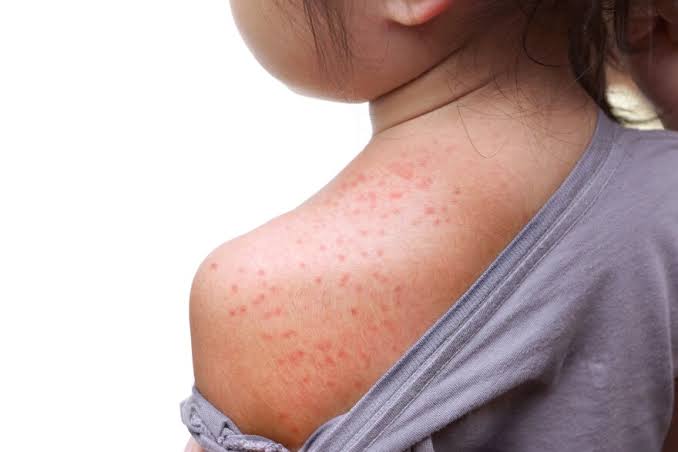
India has recorded a sharp rise in measles cases in the first half of 2026, emerging as the country with the world's second-highest reported burden of the highly contagious disease, even as there has been little public discussion, no reports of major outbreaks and limited official information on where infections are occurring.
Data from the World Health Organisation (WHO) and the US Centre for Disease Control and Prevention (CDC) show India has reported 26,607 measles cases so far this year, already far exceeding the 18,794 cases recorded during the entirety of 2025.
Only neighbouring Bangladesh, which is battling a major measles outbreak, has reported more cases this year, with 42,127 infections and nearly 800 deaths this year so far.
Measles remains one of the world's most contagious viral diseases. Although vaccine-preventable, measles can become life-threatening, particularly in young children.
The latest surge comes even as India has set an ambitious target of eliminating measles and rubella by 2026, after repeatedly missing earlier deadlines of 2015, 2020 and 2023.
The increase in cases has also highlighted another concern: the absence of publicly available information on where infections are concentrated, how many districts or states are affected, or whether any deaths have been recorded this year.
While international surveillance systems provide cumulative case numbers, there has been no detailed nationwide government update on the evolving situation.
Under the Centre's Universal Immunisation Programme (UIP), children receive two doses of the Measles-Rubella (MR) vaccine – the first between nine and 12 months of age and the second between 16 and 24 months.
The Measles-Mumps-Rubella (MMR) vaccine is also available in the private sector.
The latest figures mark a reversal after a decline in reported infections over the past two years.
WHO's Measles and Rubella Situation Update shows India reported 6,025 cases in 2021, followed by a massive jump to 43,578 in 2022 and 68,794 in 2023. Cases then fell to 20,635 in 2024 and 18,794 in 2025, before climbing once again to 26,627 in just the first half of 2026.
The last officially documented nationwide outbreak occurred in 2022, when India reported 10,416 confirmed cases and 40 deaths between November 2022 and December 12, 2022.
Health authorities had attributed that outbreak largely to disruptions in routine childhood immunisation during the COVID-19 pandemic, when vaccination services were severely affected in 2020 and 2021.
It spreads through respiratory droplets released when an infected person coughs or sneezes, with symptoms typically appearing 10 to 14 days after exposure. Early signs include fever, cough, runny nose, sore throat and inflamed eyes, followed by the characteristic red, blotchy rash.
There is no specific
antiviral treatment once infection is established. Treatment is largely supportive and may include fever-reducing medicines and vitamin A supplementation.
antiviral treatment once infection is established. Treatment is largely supportive and may include fever-reducing medicines and vitamin A supplementation.
Most children recover, but some develop severe complications such as pneumonia or encephalitis (brain swelling), which can prove fatal.
Experts note that measles can also weaken the body's immune system for months or even years after infection, leaving children vulnerable to other serious illnesses long after they have recovered.
According to experts, the case fatality rate is generally between 1 and 3 per cent, but during outbreaks it can rise to 5-10 per cent, particularly among poorly nourished and unvaccinated children.
Despite the rise in reported cases, veteran virologist Dr T Jacob John, former professor at Christian Medical College (CMC), Vellore who has also been the co-chair of India's Measles-Rubella Task Force, urged against panic over the absolute numbers.
"In a country where 2.5 to 2.6 crore children are born every year, I won't be worried about a few thousand cases as long as it does not lead to many mortalities," Dr John said.
However, he expressed concern over what he described as the lack of urgency in India's elimination programme.
"I don't think India is taking its own target of eliminating measles, just like tuberculosis (TB), seriously. I don't see any concerted effort to take the last and final steps that can move us towards the target," he said.
Dr John also flagged the lack of transparency in surveillance.
"Transparency and data too are a problem. We don't have a publicly available resource to check where these cases are being recorded," he said, pointing to the absence of district or state-level outbreak information in the public domain.
He noted that India has, fortunately, reported most measles infections among older children, who generally face a lower risk of dying from the disease than children below the age of three.
The increase in cases comes alongside encouraging improvements in vaccination coverage though.
The latest WHO-UNICEF Estimates of National Immunisation Coverage (WUENIC) show that in 2025, India achieved 98 per cent coverage for the first dose of the measles vaccine, up by one percentage point from 2024. Coverage for the second dose reached 95 per cent, improving by three percentage points over the previous year.
The gains represent a significant recovery from the pandemic years. In both 2020 and 2021, coverage for the first measles vaccine dose fell to 89 per cent, creating immunity gaps that experts believe contributed to the major outbreaks seen in subsequent years.
Public health experts say that sustaining high vaccination coverage while rapidly identifying and containing local outbreaks will be critical if India is to meet its long-delayed goal of eliminating measles anytime soon.
No Comments For This Post, Be first to write a Comment.
Most viewed from Health





Todays Epaper

English Weekly


AIMIM News


Latest Urdu News
Most Viewed
Aug 02, 2026
Should India introduce stricter laws against AI-generated fake videos and images?
Like Us
Home
About Us
Advertise With Us
All Polls
Epaper Archives
Privacy Policy
Contact Us
Download Etemaad App
© 2026 Etemaad Daily News, All Rights Reserved.