




Cancer drug costs to come down by up to 70% as govt caps trade margin at 30%
Sat 10 Oct 2026, 00:15:19

The Centre has announced a 30% cap on trade margins for all non-scheduled anti-cancer drugs, a move that could reduce the maximum retail prices (MRPs) of many cancer medicines by up to 70% and save patients an estimated Rs 2,500 crore a year.
The measure will cover branded and generic medicines, as well as domestic and imported, patented and non-patented anti-cancer drugs that fall outside the scheduled price-control framework.
The government said the decision is aimed at curbing excessive mark-ups in the medicine supply chain and making life-saving cancer treatment more affordable, while ensuring that the medicines remain available.
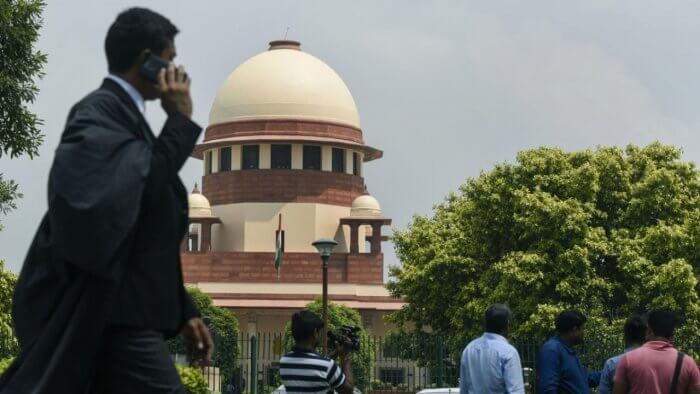
The announcement comes against the backdrop of a sharp intervention by the Supreme Court last month over the pricing of cancer medicines, particularly the huge gap between the price at which medicines reach retailers and the MRP charged to patients.
In India, for the purpose of price control, drugs are divided into two categories – those included in the National List of Essential Medicines (NLEM) are scheduled drugs for which a ceiling price is decided every year by the government.
All other drugs are non-scheduled and there is no ceiling on their prices while entering the market, though they cannot raise it later beyond 10% annually. It is estimated that about 82% of drugs consumed in the country are non-scheduled and nearly 110 of them are for treating cancers, which is a major cause of financial toxicity for thousands of families each year.
The government in recent years, has permitted import duty and goods and services tax (GST) waivers on select high-value patented drugs, yet the affordability of the majority of cancer drugs remains a major barrier for most patients.
India reports over 15 lakh new cancer cases each year and this number is rising at an alarming
rate.
rate.
On September 29, a bench of Justices Vikram Nath and Sandeep Mehta questioned the Centre over a cancer drug that was reportedly supplied to retailers for around 2,700 but carried an MRP of Ra 27,000 - a nearly ten-fold difference.
The court questioned why a uniform margin could not be considered for medicines and asked the government to examine the issue.
The Bench also raised concerns about corporate hospitals requiring patients to buy medicines from their in-house pharmacies, particularly when treatment is being reimbursed through government schemes.
The court had floated the possibility of a 16% margin framework, similar to the retailer margin used in the price-control mechanism for scheduled formulations. The court, however, had not ordered a nationwide 16% cap. The matter is scheduled to come up again on October 12.
The government's latest move instead extends the existing Trade Margin Rationalisation (TMR) approach to the wider universe of non-scheduled cancer medicines, with the margin fixed at 30%.
There is already a precedent for the approach.
In 2019, for instance, the National Pharmaceutical Pricing Authority (NPPA) capped trade margins at 30% for 42 non-scheduled anti-cancer medicines. The government says that intervention reduced the MRPs of 526 brands by an average of around 50%, generating estimated annual savings of about 984 crore for patients.
Some patient rights have underlined that this measure alone is not sufficinent, as it does not take into account the cost of manufacturing and still allows manufactuers to set high base prices.
But through the latest announcement, the government said it is estimating that the expanded intervention could result in MRP reductions of as much as 70%, depending on the existing trade margins, with total annual savings of around 2,500 crore.
No Comments For This Post, Be first to write a Comment.
Most viewed from Health





Todays Epaper

English Weekly


AIMIM News




Latest Urdu News
Most Viewed
Aug 02, 2026
Should UPI payments remain completely free for all transactions?
Like Us
Home
About Us
Advertise With Us
All Polls
Epaper Archives
Privacy Policy
Contact Us
Download Etemaad App
© 2026 Etemaad Daily News, All Rights Reserved.