




AI will kill film industry: Ram Gopal Varma predicts a radical future for cinema
Thu 03 Sep 2026, 00:25:19
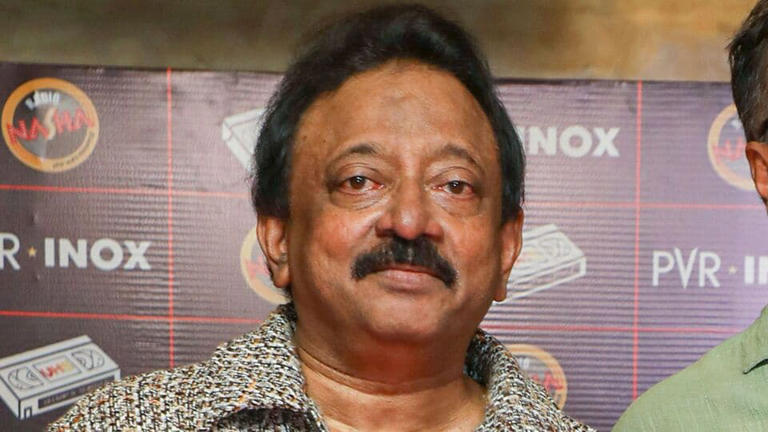
Filmmaker Ram Gopal Varma has made a bold prediction about the future of cinema, saying artificial intelligence could fundamentally change the way films are written, produced and exhibited. Varma has been extremely vocal about his leanings against development and integration of AI into everyday human activities. In a long post on X on Tuesday, RGV said the technology could make filmmaking faster and less dependent on the logistical challenges that currently define film production.
“The future of FILM is BRIGHT but at the cost of KILLING the FILM INDUSTRY,” RGV wrote.
“By December 2026 a production swarm of thousands of agents will be generally available. A finished cinematic system will need many more, rising towards AGI-level coherence.” He predicted that by December 2026, a “production swarm” involving thousands of AI agents could become generally available, and this would go far beyond using AI to write a screenplay.
The agents could generate several competing versions of a story from the same premise and evaluate them based on elements such as “necessity, tension, character truth, and consequence”.
Weak ideas would then be discarded, while stronger ones could be recombined. RGV described the resulting screenplay as something that is not simply a writer’s first idea but a “survivor” of repeated testing and refinement.
The filmmaker believes this could also change the way films are made. “The AI change will not announce itself as technology. It will be felt. Fewer logistical compromises. Fewer scenes that exist because a date or a location collapsed. More versions finished enough to be
judged rather than excused,” he wrote.
judged rather than excused,” he wrote.
RGV also predicted that post-production could change significantly. “It ends post production as a season. Edit, grade, effects, and mix become one simultaneous loop instead of departments waiting on one another for months,” he wrote.
He similarly predicted that AI could bring an end to what he calls “development hell”. “It ends development hell as a method. A finished work can be placed on the table instead of a deck requesting permission to exist,” he wrote.
RGV also believes the relationship between budgets and scale could change. If AI makes cinematic images much easier and cheaper to create, filmmakers may no longer be restricted in the same way by locations, sets, shooting schedules and other physical requirements.
“Scarcity of images will end. Scarcity of taste will not,” RGV wrote.
In simple terms, he believes that once almost anyone can create spectacular cinematic images, spectacular images themselves will no longer be enough to make a film stand out. When the technology can generate almost anything, the more difficult question will be deciding what is actually worth creating.
He also suggested that films could eventually become more flexible after they are completed. Different versions could potentially be presented to different audiences, with the director adjusting elements such as pace and emphasis without changing the fundamental story.
“The audience will not sit down for ‘an AI film’. They will sit down inside a directed world that can still change after export,” he wrote.
No Comments For This Post, Be first to write a Comment.
Most viewed from Entertainment











Todays Epaper

English Weekly


AIMIM News





Latest Urdu News
Most Viewed
Aug 02, 2026
Should India introduce stricter laws against AI-generated fake videos and images?
Like Us
Home
About Us
Advertise With Us
All Polls
Epaper Archives
Privacy Policy
Contact Us
Download Etemaad App
© 2026 Etemaad Daily News, All Rights Reserved.