



US proposes $70,000 OPT fee per student, raising concerns for Indian graduates
Tue 20 Oct 2026, 15:16:50

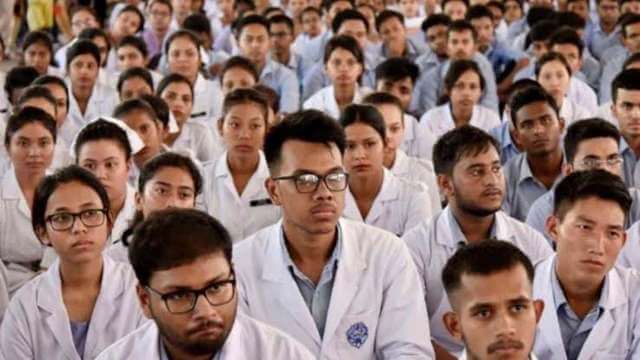
Indian students hoping to work in the United States after graduation could see their universities charged $70,000 each for Optional Practical Training under a Department of Homeland Security proposal, a plan that is not yet in effect and is open to public comment until November 9.
The proposed rule, published in the Federal Register on October 8 (document 2026-20660) by US Immigration and Customs Enforcement, would set “$70,000 for initial OPT; and $30,000 for any subsequent OPT” for each F-1 student through a Student and Exchange Visitor Program-certified institution.
The subsequent fee would apply to the 24-month STEM OPT extension. A student who uses both pre-completion and post-completion OPT would face a total of $100,000, the document says, compared to $70,000 if the entire OPT period is after graduation.
It is not in effect yet. It is a notice of proposed rulemaking. Comments must
be received by November 9, under docket ICEB-2026-0100 on regulations.gov. DHS must review comments before issuing any final rule, and no implementation date has been set.
be received by November 9, under docket ICEB-2026-0100 on regulations.gov. DHS must review comments before issuing any final rule, and no implementation date has been set.
The fee would be paid by the institution before a designated school official recommends a student for OPT. But DHS “acknowledges that the schools may pass the financial obligation of this proposed fee onto F-1 nonimmigrant students, all students, or employers.”
Schools could seek a refund if the student does not receive an OPT employment authorisation document.
Universities weighing a $70,000 charge per student may limit OPT support, particularly for non-STEM courses, where DHS itself assumes institutions “may be less likely to pay” for a single year.
The proposal comes on top of the $100,000 H-1B fee policy now in litigation and a separate DHS rule ending automatic extensions of work permits.
No Comments For This Post, Be first to write a Comment.
Most viewed from Edu and Jobs











Todays Epaper

English Weekly


AIMIM News




Latest Urdu News
Most Viewed
Aug 02, 2026
Should India introduce stricter laws against AI-generated fake videos and images?
Like Us
Home
About Us
Advertise With Us
All Polls
Epaper Archives
Privacy Policy
Contact Us
Download Etemaad App
© 2026 Etemaad Daily News, All Rights Reserved.