




UP madrassa students shift to universities after Kamil–Fazil recognition scrapped
Tue 09 Dec 2025, 01:22:53
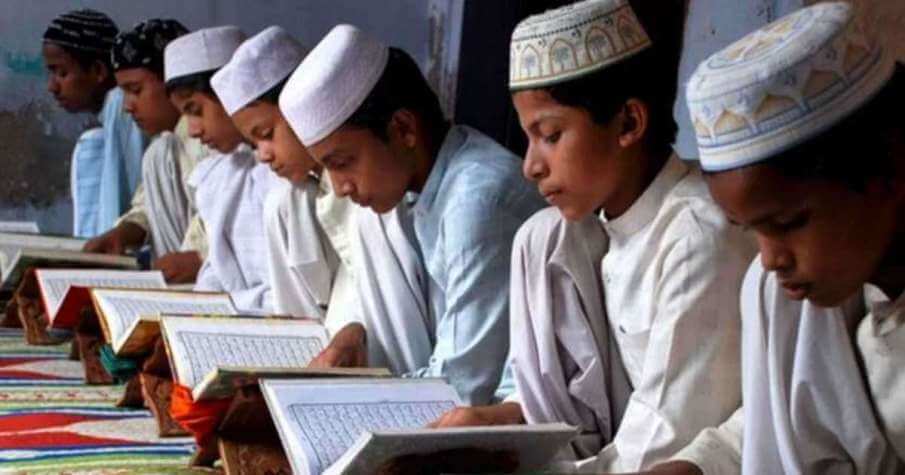
Several students enrolled in Kamil and Fazil courses at madrassas in Uttar Pradesh are now considering new academic options after the Supreme Court of India ruled that the state madrassa board lacked the authority to award these degrees, citing violation of the University Grants Commission (UGC) Act.
The decision delivered on November 5 last year affected around 32,000 students, declaring the practice "unconstitutional" and reserving degree-awarding powers to universities under the UGC.
Madrassa education usually follows a tiered structure: Munshi/Maulvi levels (roughly Class 10 and 12 equivalents) followed by Kamil (undergraduate equivalent) and Fazil (postgraduate equivalent) in Islamic theology and Arabic studies.
These degrees are recognised mainly within
religious institutions, while students seeking mainstream careers typically shift to universities for conventional BA/MA pathways.
religious institutions, while students seeking mainstream careers typically shift to universities for conventional BA/MA pathways.
Uttar Pradesh Minister of State for Minority Welfare Danish Azad Ansari stated the government is working on a solution. He assured that teachers currently employed in aided madrassas on the basis of Kamil and Fazil degrees would not be affected.
The Teachers’ Association Madaris-e-Arabia Uttar Pradesh has filed a petition in the Supreme Court, seeking that madrassa students be affiliated with Khwaja Moinuddin Chishti Language University so their exams and degrees can be regularised.
During a hearing on May 30, the court sought responses from the state government, UGC, and the Uttar Pradesh Board of Madarsa Education.
No Comments For This Post, Be first to write a Comment.
Most viewed from Edu and Jobs







.jpg)


Todays Epaper
English Weekly


AIMIM News





Latest Urdu News
Most Viewed
May 26, 2020
Which cricket teams will reach the IPL 2026 finals?
Latest Videos View All
.jpg)
.jpg)
.jpg)

Like Us
Home
About Us
Advertise With Us
All Polls
Epaper Archives
Privacy Policy
Contact Us
Download Etemaad App
© 2026 Etemaad Daily News, All Rights Reserved.