




Budget 2026: Education allocation up 8% to Rs 1.39 lakh cr, skills and jobs in focus
Tue 03 Feb 2026, 01:23:19
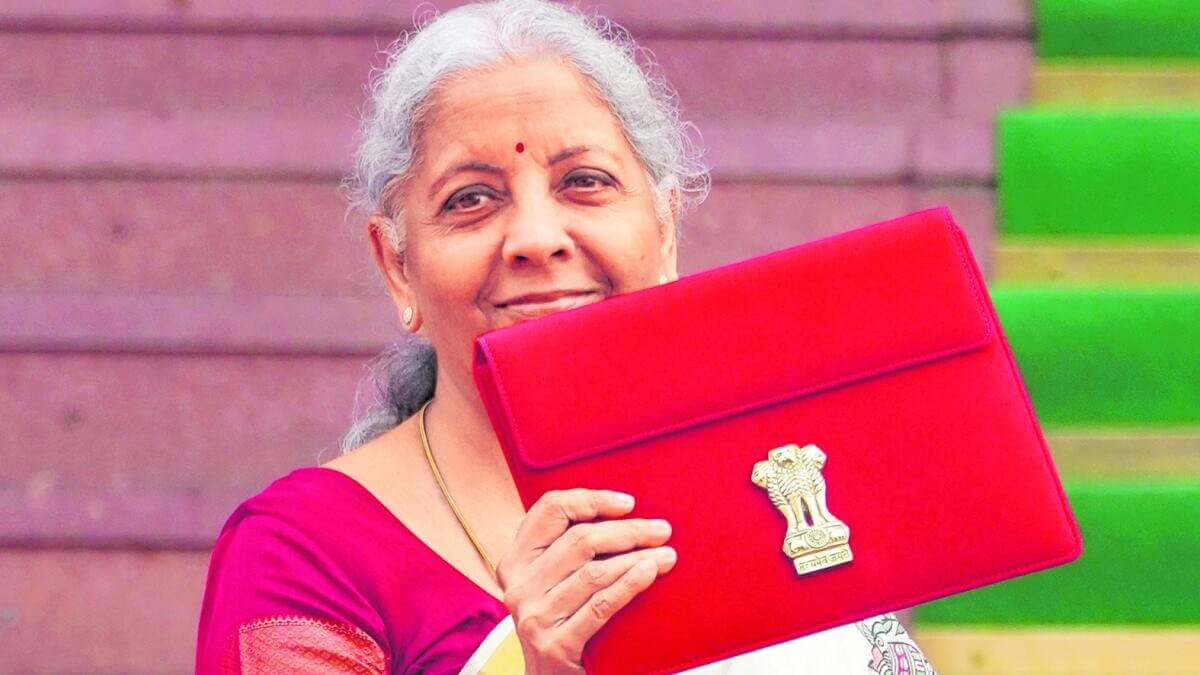
Education and skilling have been placed firmly at the centre of India’s long-term growth roadmap in the Union Budget 2026–27, with the Centre raising the education allocation by over 8 per cent to Rs 1.39 lakh crore.
The enhanced outlay signals a renewed push towards building a future-ready workforce aligned with emerging technologies, industry needs and inclusive development.
The allocation accounts for nearly 2.6 per cent of the total estimated expenditure of Rs 53.5 lakh crore for FY27, marking the highest-ever budgetary support for the education ministry.
Presenting the Budget in Parliament, Finance Minister Nirmala Sitharaman announced that the Ministry of Education has been allocated Rs 1.39 lakh crore for FY 2026–27, an increase of 8.27 per cent from Rs 1.28 lakh crore in the previous financial year.
Of the total allocation, Rs 83,562.26 crore has been earmarked for school education, while higher education received Rs 55,727 crore.
While school education saw a growth of 6.35 per cent, the higher education budget registered a sharper increase of 11.28 per cent, reflecting the government’s emphasis on advanced learning, research and skill development.
Among the key structural reforms announced was the development of five University Townships near major industrial and logistics corridors. These are envisioned as integrated hubs for education, research, innovation and skilling, aimed at improving industry-academia linkages and employability.
To further align education with labour market needs, the government proposed setting up a high-powered Education-to-Employment and Enterprise Standing Committee. The committee will focus on synchronising education policies with service growth, job creation and emerging technologies such as artificial intelligence.
In a significant relief for students and families, the Finance Minister announced a reduction in Tax Collected at Source (TCS) under the Liberalised Remittance Scheme (LRS) for education and medical purposes from 5 per cent to 2 per cent.
TCS on overseas tour packages has also been reduced to 2 per cent, without any threshold limit, easing financial pressure on students planning to study
abroad.
abroad.
The Budget placed strong emphasis on inclusivity, particularly for women in higher education and STEM fields. The government proposed establishing one girls’ hostel in every district, in partnership with state governments, to support women students pursuing higher studies.
Union Education Minister Dharmendra Pradhan welcomed the enhanced allocation, calling it a reflection of Prime Minister Narendra Modi’s vision for a developed India. Highlighting women’s growing contribution to science and technology, he said the government plans to strengthen educational infrastructure and build a knowledge-based economy.
To address the shortage of veterinary professionals, the Budget proposed a loan-linked capital subsidy to encourage private-sector participation in setting up veterinary and para-veterinary colleges, hospitals, diagnostic labs and breeding centres. The initiative aims to add over 20,000 trained professionals to the sector.
Recognising the rapid growth of the Animation, Visual Effects, Gaming and Comics (AVGC) industry, expected to require two million professionals by 2030—the government announced support for the Indian Institute of Creative Technologies, Mumbai. AVGC Content Creator Labs will be set up in 15,000 secondary schools and 500 colleges nationwide.
The Budget also proposed upgrading the National Council for Hotel Management and Catering Technology into a National Institute of Hospitality. Additionally, a pilot programme will upskill 10,000 tourist guides across 20 tourist destinations through a 12-week hybrid training course in collaboration with an Indian Institute of Management.
To promote research in astrophysics and astronomy, the Finance Minister announced plans to upgrade telescope infrastructure and establish new facilities at four locations across the country.
Former UGC Chairman Mamidala Jagadesh Kumar welcomed the higher allocation, stating that it reflects India’s commitment to investing in people, knowledge and skills in line with the National Education Policy.
He also noted continued support for flagship schemes, including Rs 42,100 crore for Samagra Shiksha, Rs 12,750 crore for PM POSHAN and Rs 7,500 crore for PM SHRI Schools.
No Comments For This Post, Be first to write a Comment.
Most viewed from Edu and Jobs



.jpg)





Todays Epaper

English Weekly


AIMIM News






Latest Urdu News
Most Viewed
May 26, 2020
Which cricket team is your favourite to win the T20 World Cup 2026?
Latest Videos View All
.jpg)
.jpg)
.jpg)


Like Us
Home
About Us
Advertise With Us
All Polls
Epaper Archives
Privacy Policy
Contact Us
Download Etemaad App
© 2026 Etemaad Daily News, All Rights Reserved.